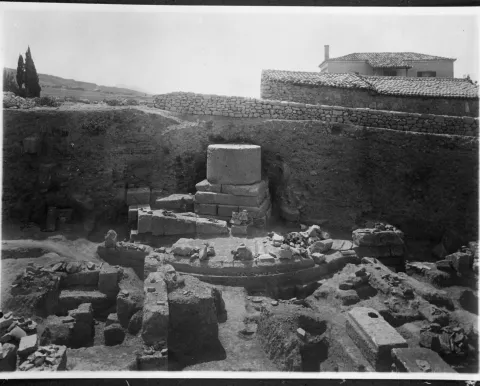
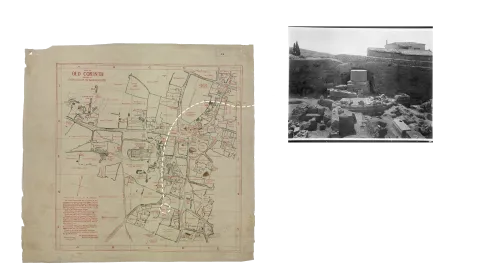
In 1933 Oscar Broneer was excavating in the Vlachos Field in the Forum. The field was bought for 20,000 (10,000 drachmas/stremma), “High price!” in ASCSA Corinth Excavations Notebook 132, p. 72, December 1, 1922. The excavators uncovered the circular base of a huge monument, the Circular Monument. Only the base is preserved, parts of the second drum were broken up and built into gate posts, so it is difficult to know what it originally supported.
Oscar Broneer was a prominent archaeologist who served as acting director of the ASCSA from 1947-1948 and directed excavations at Isthmia from 1952-1956. In Corinth he excavated for many decades and brought to light and published two significant monuments, the Odeion and the South Stoa. Broneer dedicated his life to the Corinthia, adopted Ancient Corinth as his home, served as the Executive Vice President of the Greek War Relief Association in New York City during WWII and was awarded the Royal Hellenic Order of the Phoenix for acts of dedication to his adopted country in 1962. He filmed the Triumph Over Time in 1947. Broneer died in 1992 and was buried in the village cemetery.
During his excavations in the Vlachos field, he wrote in ASCSA Corinth Excavations Notebook 135, pp. 168-169, May 24, 1933:
“Wednesday May 24, 1933
109 men, 71 in Agora SE
295 and 104 cars for a total of 399 cars (of dumped earth)
Work continued in Vlachos field in middle section west of circular base where we destroyed walls and began defining larger circle of base. Also continued at east and where we are cutting away modern road. The road was removed toward the east close to the barn in order to leave room for us to clear the southeast corner of the building.”
The number of men employed is huge, 109 men in this case. The number of cars refers to the railroad cars, visible in the excavation photos, full of earth that was removed from the archaeological area and dumped every single day in order to reveal the ancient buildings. According to this notebook entry, 399 cars of earth were moved in a single day. This shows the immense amount of labor by the workforce of Corinthian workmen.
The objects discovered include a wide range of artifacts with diverse dates and of different types of materials including remains of a whole Roman terracotta roof belonging to a monument in the center of the Forum to the north of the South Stoa. Only a small collection is shown here.
Circular Monument in foreground during excavation in 1928-1929 with modern houses on top
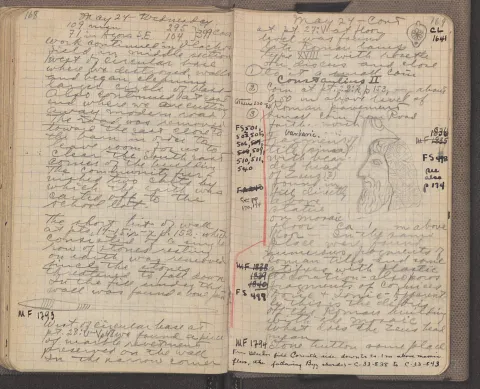
Wednesday May 24, 1933. 109 men. Work continued in Vlachos field in middle section west of circular base… We are cutting away modern road.
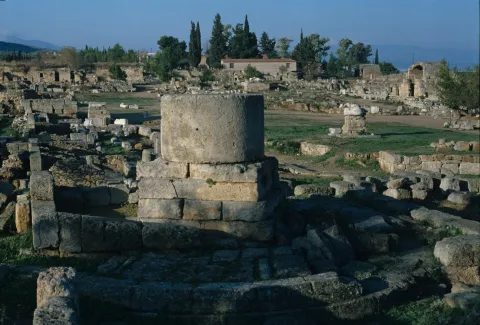
Roman Forum looking from east towards the Museum, with Circular Monument in the foreground
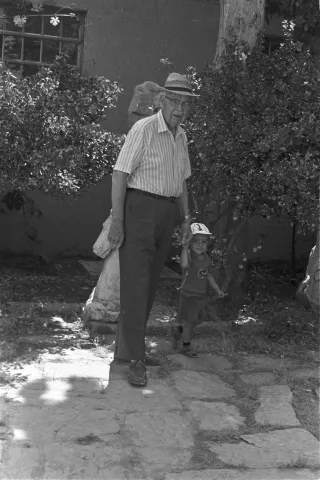
Oscar Broneer (left) with his 'grandson' Γιώργος Μπελίτσης (Giorgos Belitsis) in the Museum courtyard, 1981
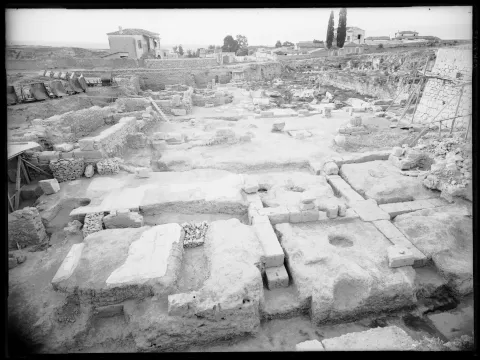
Area of excavation by Broneer with circular base in the middle, ancient walls to the south and modern houses and road on top of antiquities, 1933
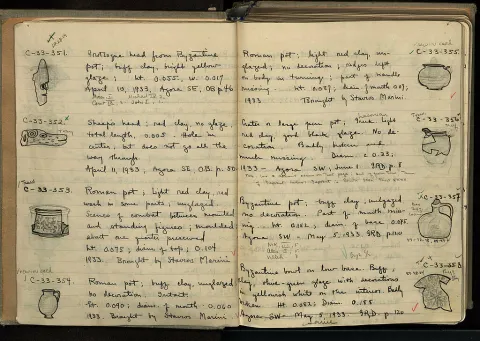
List of artifacts found and catalogued from Oscar Broneer's (OB) excavations along with other objects brought in by Stavros Marinis, in Find Inventory Book, 1933
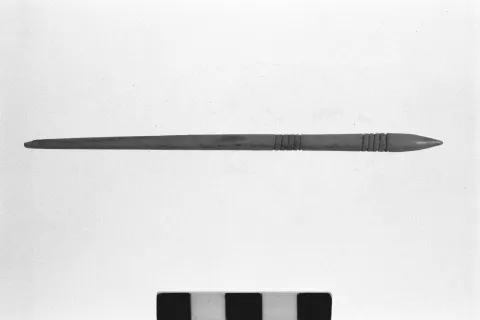
Byzantine bone pin of the 10th-12th centuries AD, half polished on the lathe (cat. no. MF 1793)
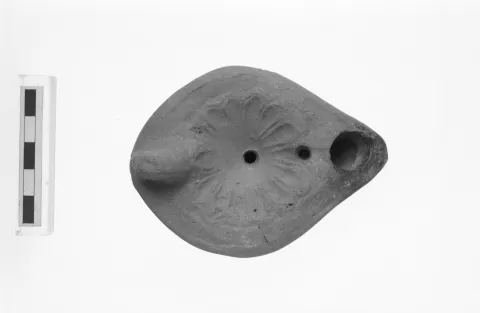
Roman terracotta lamp Broneer Type XXVIII with rosette decoration on disc, burning on nozzle, 5th-6th centuries AD (cat. no. L 1641)
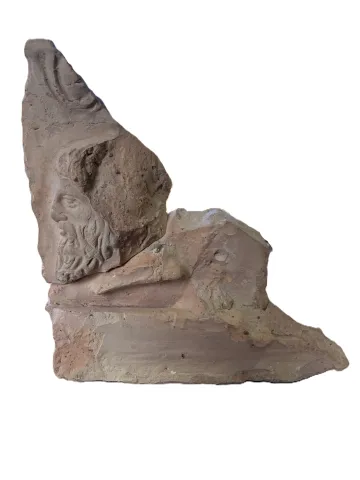
Roman terracotta sima with bearded head of Zeus (cat. no. FS 498)
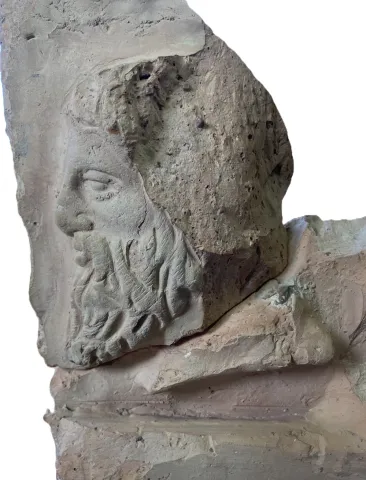
Roman terracotta sima with bearded head of Zeus, detail of head (cat. no. FS 498)
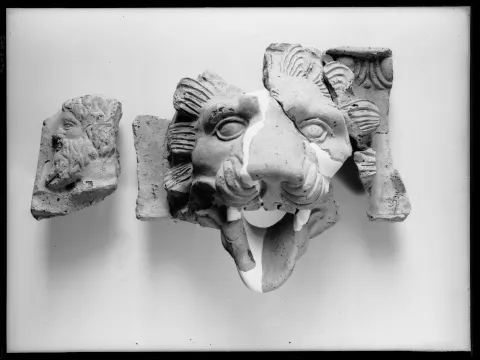
Roman terracotta sima with bearded head of Zeus and lion's head spout (cat. no. FS 498)
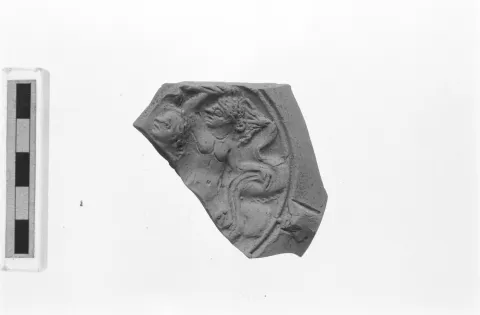
Roman terracotta lamp Broneer Type XXVII disc with Scylla and Charybdis representation, 2nd century AD (cat. no. L 1643)
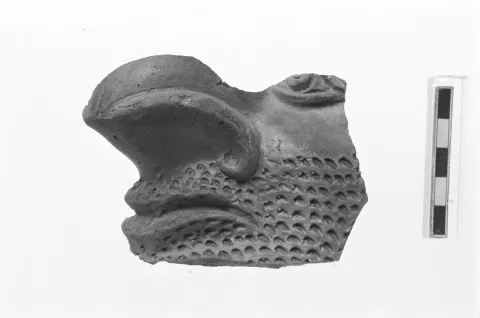
Roman terracotta plastic vessel, lagynos?, in the form of a grotesque head, 1st-2nd centuries AD (cat. no. C 1933 1479 )
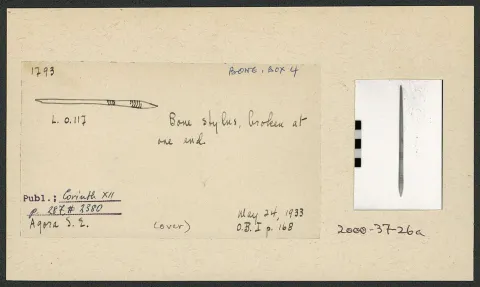
card
Oscar Broneer Excavating in Vlachos’ Field