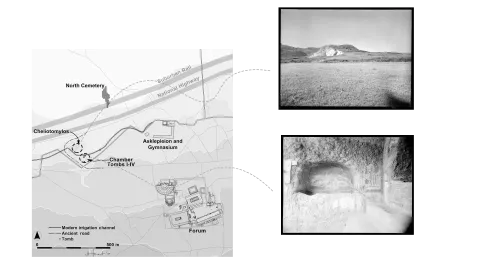
North-west of the Roman forum two hills are located overlooking the plain to the North. Cheliotomylos was the hill where the family of Cheliotis had a mill. Tseliolophos was the hill to the east of Cheliotomylos and separated from it by a ravine. The Tselios family owned property there. Archaeologists refer to these hills as Cheliotomylos and Tseliolophos. During the early 1930s 117 Geometric to Roman graves and several chamber tombs were found at Cheliotomylos. The most striking find was a well that contained a great mass of Early Helladic pottery of the 3 rd millennium BC and 17 human skeletons.
Excavations at Tseliolophos under the direction of T. Leslie Shear Sr., but conducted by his wife, Josephine Platner, during 1931 revealed that the area concealed a small Roman cemetery of 4 chamber tombs.
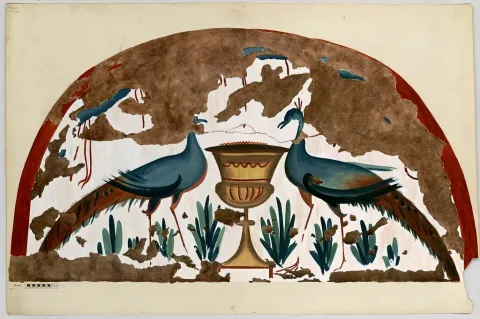
Among the graves the most spectacular was Chamber Tomb II or the Shear Painted Tomb, as it is now known. The tomb dates to the early 2nd c. AD and belonged to a wealthy Corinthian family. It was a substantial edifice with an imposing entrance and an elaborately decorated interior. Shear commented, “A tomb of this magnificence must have been constructed for a man of wealth and distinction, and the presence of military guards at each side of the grave implies some official association.” For Mary Walbank, the armed guards are rather mythological figures, the Dioskouroi, as savior gods and as a sign that the dead too may achieve immortality. The tomb was reused in the 5 th -6 th c. AD
From the excavations within the tomb and in the area around numerous finds came to light. A complete Geometric painted terracotta figurine of a centaur was found in fill lower down the slope to the NW of the tombs.
Grave goods from within the tomb include terracotta lamps, pottery, glass vessels, alabastra for expensive perfumed oils, gold foil coins for the Charon, and jewellery.
From Chamber Tomb IV, in the neighbourhood of the Shear Painted Tomb, comes an inscription, which was cemented in the entrance. It is dated in the first half of the 6th c. AD and it records the purchase of a grave by Euplous, the charioteer, for his wife, Maria. The inscription records that Euplous paid one and a half gold pieces, which was the going rate for a grave in a desirable location. The purchase was negotiated with Anastasios, a minor ecclesiastical official.
Interior of Shear Painted Tomb decoration, wall-painting of peacocks, symbols of immortality, by Mary Wyckof
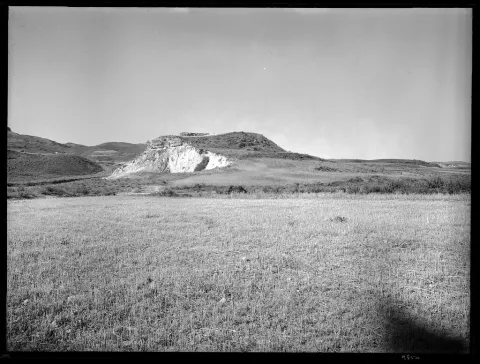
View from North of Cheliotomylos on the right and Tseliolophos on the left
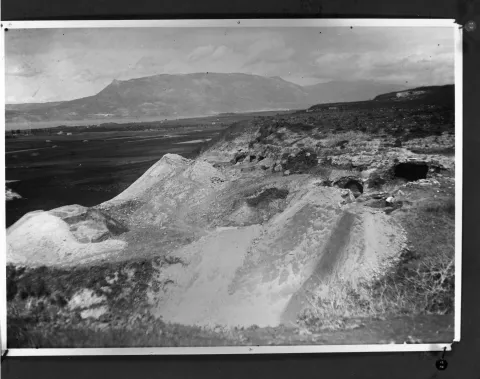
Tseliolophos: view of graves during excavations from SW, Geraneia in the distance, 1931
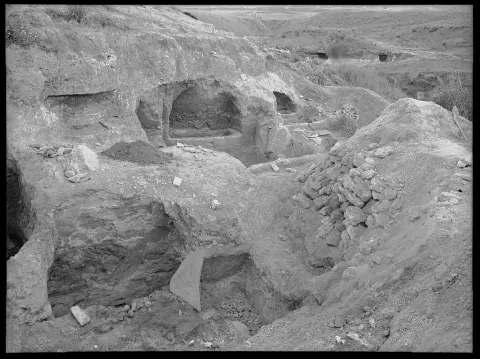
Tseliolophos: view of graves during excavations from N, tombs I and II, 1931
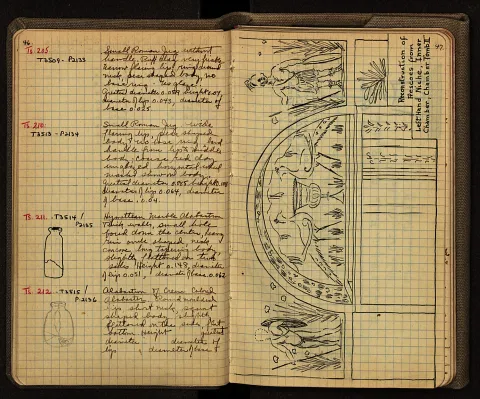
Corinth Notebook 555, pp. 46-47, list of excavation finds and drawing of decoration of interior of tomb with peacocks and Dioskouroi, by Josephine Platner Shear
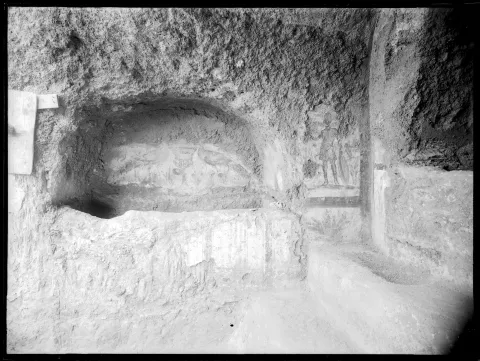
Interior of Shear Painted Tomb decoration
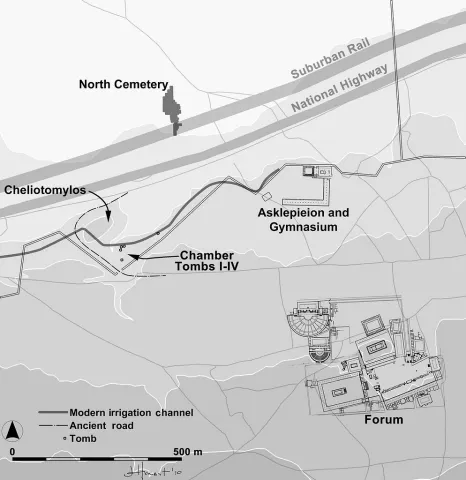
Map of Ancient Corinth with Cheliotomylos indicated. Tseliolophos is the hill where chamber tombs I-IV are located. By J. A. Herbst
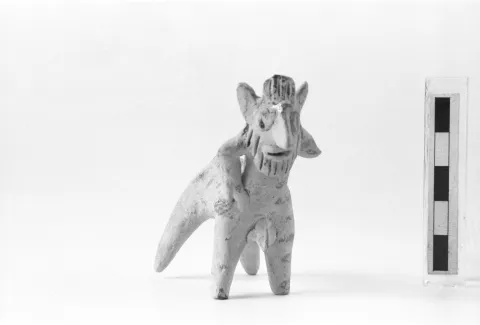
Handmade figurine of a centaur (cat. no. T 3522)
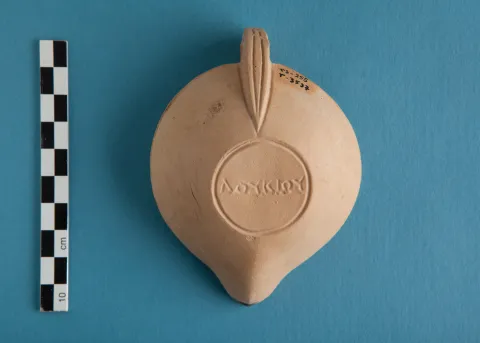
Type XXVII lamp with the signature of the lamp maker Loukios, 3rd c. AD, bottom of lamp (cat. no. T 3537)
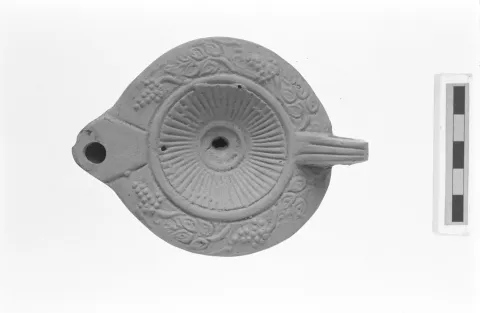
Type XXVII lamp with the signature of the lamp maker Loukios, 3rd c. AD, top of lamp (cat. no. T 3537)
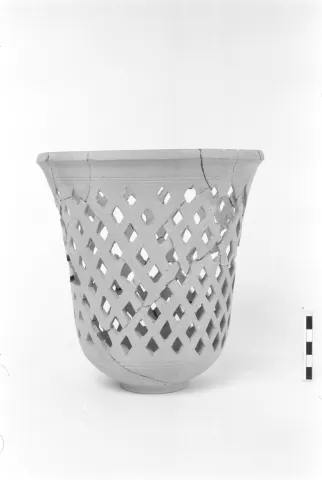
Lattice-work clay kalathos, 2nd or 3rd c. AD (cat. no. T 3343)
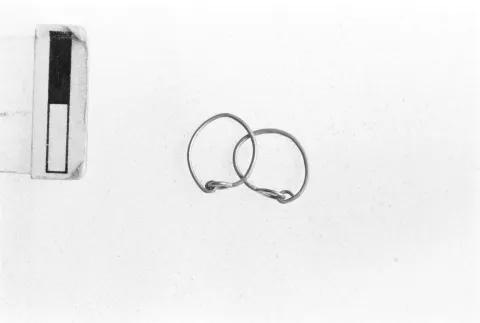
Gold earrings of the 1st-3rd c. AD (cat. no. T 3518)
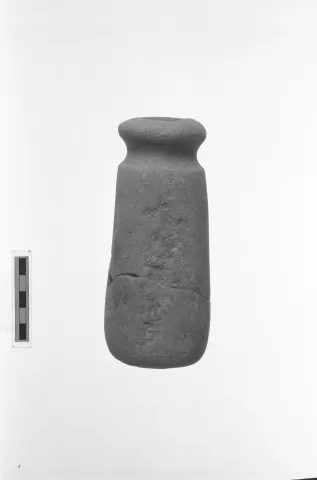
Marble alabastron for perfumed oils of uncertain date (cat. no. T 3514)
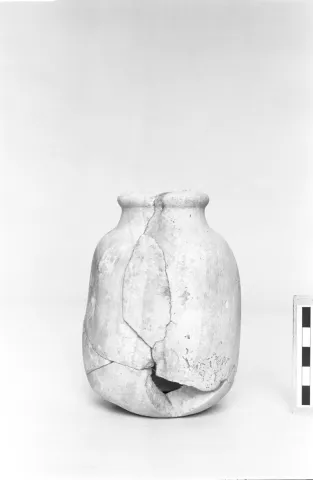
Alabaster alabastron for perfumed oils of uncertain date (cat. no. T 3515)
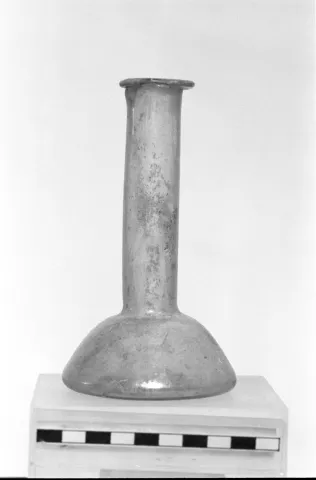
Conical unguentarium or glass bottle for oil for preparing the corpse (cat. no. T 3347)
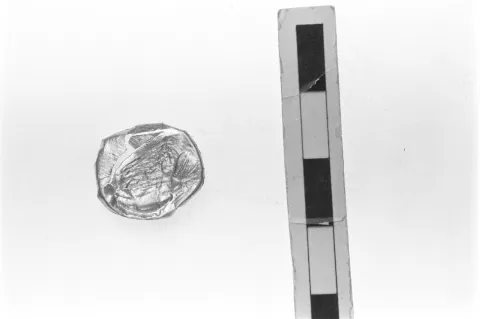
Gold danake or Charon's fee, gold foil impression with Sikyonian dove (cat. no. T 3332)
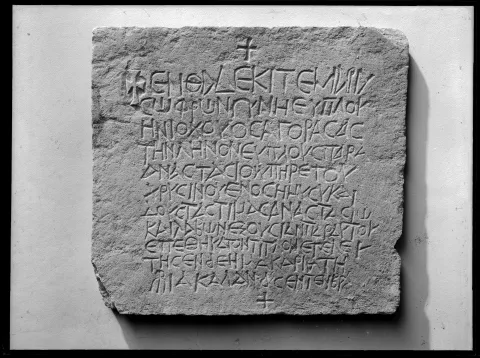
Grave inscription for Maria, wife of Euplous, the charioteer (cat. no. I 2301 )
Tseliolophos